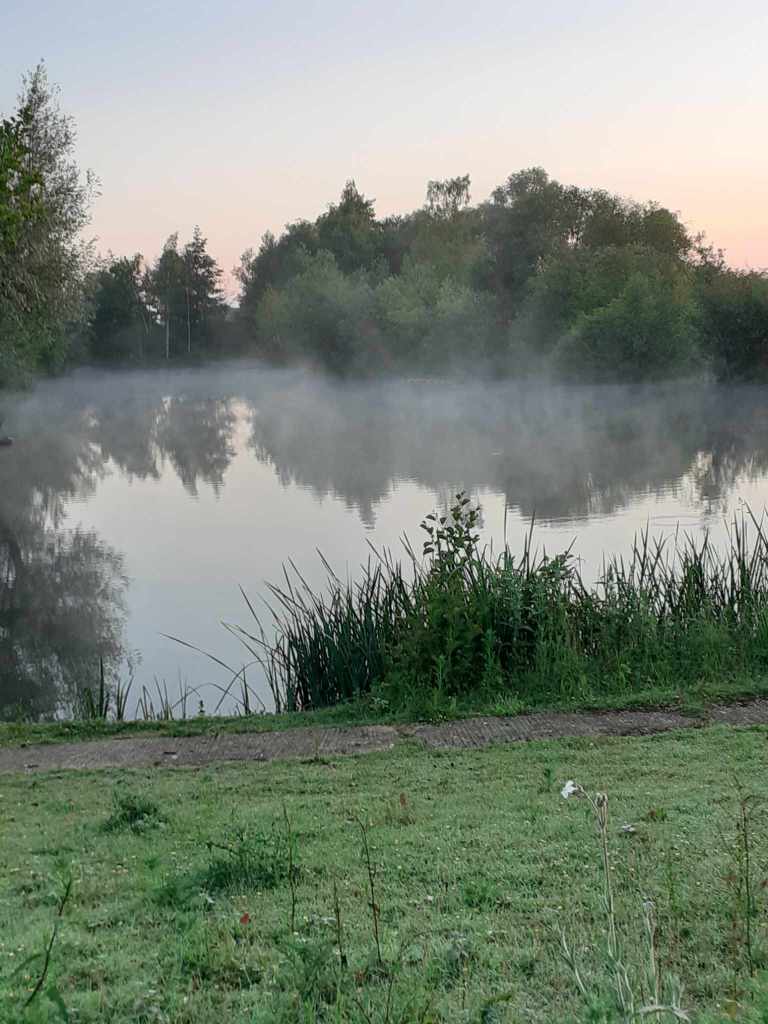
Well, actually, you can, and this is an issue that the Club Committee has to address as far as Bordeaux Pit is concerned.
Historically, Bordeaux has always been run by the Club as a genuinely ‘mixed’ fishery and stocked and maintained in such a way to set itself apart from commercial fisheries by not being heavily stocked, yet you could always be sure of catching a good net of fish. In the last few years, the balance of species has shifted considerably and there is now a significant head of carp in the lake.
The Plan
In considering the future of Bordeaux, the Committee has agreed that we should try to re-establish the previous balance of species within the lake to ensure that the truly mixed nature of the fishery is restored. The plan is therefore, to undertake a targeted removal of excess carp via an electro-fishing exercise later in the autumn, followed by a re-stocking of [probably] some bream, ide and F1’s.
We understand that any plan to remove fish from the lake is likely to be unpopular with some members in the short-term. It is not a decision that has been taken lightly. To summarise the thinking behind the plan:
- Based on the EA guidelines, the carp biomass in the lake is far too high and without intervention, it will continue to increase. If unchecked, this will result in an eventual significant level of fish mortality.
- We are already seeing that as well as impacting other species in the lake, the carp themselves are also being affected, with their growth becoming stunted. The larger fish seem to stop adding weight when they get above roughly 15lb.
- There is a large number of smaller / younger fish, including those recently added from the small lake which, whilst relatively healthy at present, will begin to be limited in growth by the lack of available food.
- A number of the older fish which have been caught several times are showing signs of damage to their scales and in particular, to their mouths, which impacts on their ability to feed effectively, and makes them prone to infection.
With these factors in mind, we have decided to bring in a contractor to undertake the work on our behalf. They have a wealth of experience in fish management and fishery development, and we will be guided by them on the details of the exercise at the time.
We will be hoping to retain some of the larger carp, including mirrors, subject to them being in good condition [i.e. Able to feed effectively and not deformed or otherwise injured]. A number of the smaller carp will be removed so that by thinning out the stock we will improve the overall quality of fish and allow those remaining to grow to a greater size than they would do at present. The overall number and size of carp retained will still be at the high end of the recommended biomass levels.
Background
The netting exercise, undertaken last November indicated that there are approximately 250 – 300 carp in the range of roughly 3lb to 18lb. Conversely, the numbers of roach, skimmer bream and ide were considerably lower than expected and their size was concentrated at the lower end of expectations. Catches this year by pleasure anglers, including those targeting carp, and the weights and numbers seen in matches bear out these findings. These numbers suggest a carp ‘biomass’ of something like 2,400lb in a lake of approximately 1.5 acres.
The Committee has sought guidance on this from the Environment Agency [EA] and our Regional Fisheries Technical Officer, Chris Middleton, has offered the following observations as probable causes:
It’s likely that the carp have out competed the silver fish and therefore had an impact on their survival/recruitment. With regards to lake biomass [the combined weight of fish in the venue], generally speaking a low, natural stock density is around 200lb of fish per acre compared to a high stock density of around 750lb of fish per acre…….. Every fishery is different and there are many out there which have a biomass of greater than 1,000lb an acre, and some of these can sustain this without any issues, whilst others haven’t and have suffered with significant fish mortalities. [See below re. insufficient food].
Other possible issues might include:
Avian predation – If you’re stocking silver fish which are cormorant sized fodder these will be having an impact, be it via direct predation or influencing the fish distribution to areas of the lake which offer sanctuary e.g. tree roots, fish reefs etc. all areas which are not suitable for effective surveying, especially with nets. If this is happening you could find the fish are holding up during daylight hours and not venturing out to feed until darkness, something cormorants have caused all over the lowland rivers and drains.
Insufficient food – are anglers regularly and actively trying to target the silver fish? Or are they more interested in the carp? If there is insufficient natural bait within the lake and anglers are fishing with boilies and larger baits not suited for silvers, they may be struggling due to lack of food and competition from the larger fish which will out compete them. The only commercial water locally where silvers, particularly roach, etc survive really well and grow to large proportions, is a lake near Ely. They survived due to the sheer amount of angler’s bait going in on every match [two or three times per week] and no anglers were targeting them, mainly targeting the carp. Had the lake not been netted regularly, it is likely that a significant fish mortality would have occurred.
The Club is addressing the issue of avian predation [by cormorants]. A number of fish reefs / sanctuaries are already in place, and we have recently planted a significant number of water lilies that will begin to show next summer. The gas fired bird-scarer will be operational again shortly and we have been granted a limited culling license by the EA. Due to the low number of anglers regularly fishing Bordeaux, particularly during the winter months, the amount of food probably is somewhat limited, and the Club cannot afford to provide supplementary feeding on a regular basis.
In the case of a lake like Bordeaux, where there is a substantial carp population and fish of large / specimen size, these fish will out-compete other [non-carp] species such that they will become emaciated and generally die back. This competition does not become important until carp comprise a significant proportion [in excess of 50%] of the total biomass. This tends not to affect smaller fish, but for them to grow larger [than say, six or seven inches], species such as bream or roach alter their diet from predominantly plankton to include larger bottom-dwelling invertebrates which carp favour.
 Saffron Walden Angling Club